Mexico City: The centuries-old Holy Week reenactment of the Passion, Death, and Resurrection of Jesus Christ in Iztapalapa, one of Mexico City’s most iconic religious traditions, has been officially recognized as a Cultural Heritage of Humanity by the United Nations Educational, Scientific and Cultural Organization (UNESCO).
The decision was taken during a UNESCO committee meeting held in New Delhi, India, where the nomination of the Iztapalapa Way of the Cross was examined and unanimously approved. The recognition places the deeply rooted Mexican devotion among the world’s protected intangible cultural expressions, highlighting its historical, spiritual, and social significance.
Addressing the gathering, Edaly Quiroz, Deputy Director of Mexico’s National Institute of Anthropology and History, emphasized that the Iztapalapa Holy Week observance transcends theatrical representation. She described it as a living expression of collective faith, unity, and resilience, bringing together thousands of participants and spectators in a shared act of remembrance, identity, and community involvement.
UNESCO, in its official description, noted that the Cultural Heritage list includes traditions, practices, and forms of knowledge that communities themselves identify as integral to their cultural identity. The organization underlined the responsibility to safeguard such traditions so they can be preserved and passed on to future generations.
The spiritual roots of the Iztapalapa tradition were explained by Juan Pablo Serrano, custodian of the revered image of the Lord of the Little Cave housed in the Iztapalapa Cathedral. In an interview, he traced the devotion back to 1687, when an image of Christ being transported from Oaxaca to Mexico City was temporarily placed in a cave on the Hill of the Star. According to tradition, when the carriers attempted to continue their journey, the image could not be moved, leading the faithful to believe that Christ wished to remain there. This moment marked the beginning of a unique and enduring devotion centered on the cave.
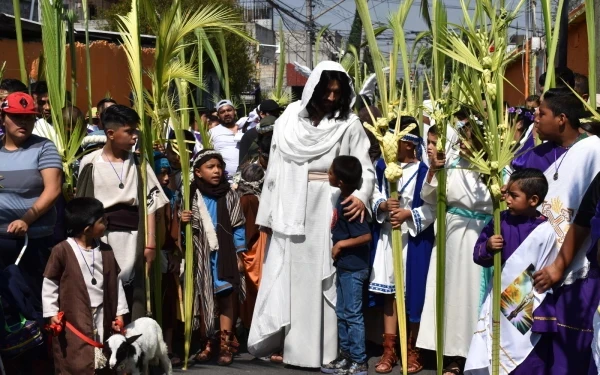
Serrano further explained that the public reenactment of the Stations of the Cross became firmly established in 1833 during a devastating cholera epidemic. As deaths mounted, the residents processed with the sacred image, fervently praying for divine intervention. When the epidemic suddenly subsided after days of prayer, the community interpreted it as a miraculous response and vowed to commemorate Christ’s Passion annually as an act of thanksgiving.
Since then, the Holy Week observance in Iztapalapa has grown into one of the largest religious events in the world. In Holy Week 2025 alone, the reenactment drew an estimated two million people, including pilgrims, tourists, and observers from diverse religious and cultural backgrounds.
Welcoming the UNESCO recognition, Serrano expressed deep pride on behalf of the local community, calling it an honor that residents have long cherished. He noted that over the years, the celebration has attracted not only Catholics but also individuals of other faiths or no religious affiliation, many of whom, moved by the experience, enter the church, reflect deeply, and undergo profound personal transformation.
Serrano stressed that the new international recognition brings with it a heightened sense of responsibility. He said the community is committed to ensuring that the celebration remains a genuine offering of gratitude to God, adding that every act performed in devotion ultimately becomes a powerful means of catechesis and evangelization.
With UNESCO’s endorsement, the Iztapalapa Way of the Cross now stands not only as a cornerstone of Mexican religious life but also as a globally recognized symbol of faith, memory, and living cultural heritage.