South Sudan, the world’s youngest country, declared independence in 2011 and has Juba as its capital, with a population of about 11.5 million.
Politics and Governance
South Sudan’s political pathway is defined by peace agreements and an extended transitional period. The country aims to hold its first-ever national elections in December 2026 under the 2018 agreement—an inflection point for legitimizing institutions and expanding civil participation. Governance indices stress the importance of security, institutional reform, and inclusive processes to advance democratization and market transformation.
Geography and Borders
South Sudan borders:
• Sudan to the north
• Ethiopia to the east
• Kenya and Uganda to the south
• Democratic Republic of the Congo to the southwest
• Central African Republic to the west
This crossroads location positions it within East and Central African trade routes and regional diplomacy.
Language and Culture
• Official language: English
• National languages: Dinka, Nuer, Bari, Zande, and over 60 others, including Juba Arabic.
• Cultural tapestry: Nilotic, Equatorian, and other traditions expressed through oral histories, music, dance, and communal practices.
Economy
South Sudan’s economy is marked by:
• Recovery efforts from conflict
• High dependency on oil
• Structural challenges in governance and market institutions
Conflicts and Relations
Tensions and sporadic clashes continue between South Sudan and Sudan, especially along disputed border areas like Abyei and oil-rich regions. While most current fighting in 2025–2026 is internal within South Sudan, unresolved disputes with Sudan over boundaries, oil transit fees, and Abyei still spark occasional violence and diplomatic standoffs.
Religion
Religious life in South Sudan is predominantly Christian, blended with traditional faiths, alongside a Muslim minority. Recent estimates suggest:
• 60.5% Christianity
• 32.9% traditional faiths
• 6.2% Islam
This highlights syncretic practices and coexistence across communities.
Tourism
Tourism remains underdeveloped, but there is potential in eco-tourism, cultural circuits, and riverine experiences if safety, infrastructure, and conservation partnerships improve.
Main attractions include:
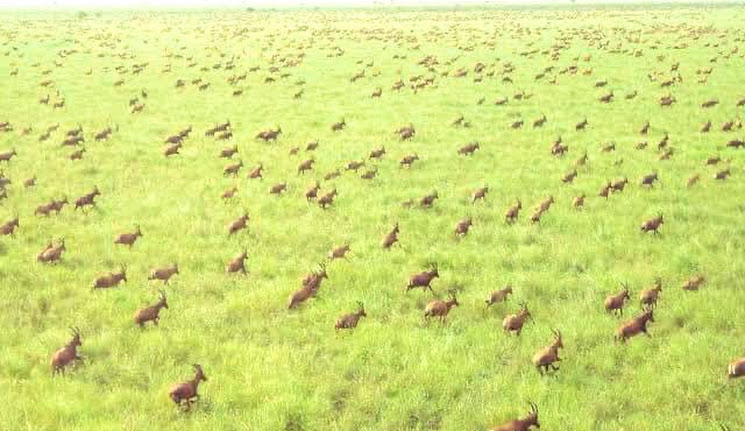
• Wild landscapes: vast savannas, rivers, and wetlands with rich wildlife and birdlife
• Community festivals, craft traditions, and local cuisines
• Juba’s markets and riverfront, offering cultural tours
Investment Opportunities
There are significant opportunities in the following sectors:
• Energy and infrastructure: Power generation, grid expansion, and transport corridors
• Agriculture and agribusiness: Irrigation, seed systems, storage, and processing
• Digital services: Connectivity, mobile finance, and e-government
• Tourism and hospitality: Lodging, guiding, and conservation-linked enterprises
Indian Community
The Indian community in South Sudan is very small, estimated at only a few hundred people, mostly concentrated in Juba. They are primarily professionals, business owners, and workers in sectors like construction, trade, healthcare, and UN/NGO services.
Conclusion
South Sudan’s journey since independence has been marked by immense challenges, yet its resilience and potential remain undeniable. With vast natural resources, rich cultural diversity, and a youthful population eager for change, the country holds the promise of transformation. As peace efforts continue and democratic institutions strengthen, South Sudan has the opportunity to move beyond conflict and build a future rooted in stability, prosperity, and unity. By investing in education, infrastructure, and inclusive governance, the nation can unlock its role as a vibrant hub in East Africa.
The hope is clear: South Sudan, though young, can rise as a beacon of renewal where justice, liberty, and prosperity truly flourish.