Angola, with its capital Luanda, is a fast-growing economy in Central Africa. With a population of over 40 million, the country borders Namibia, Zambia, the Democratic Republic of Congo, and the Atlantic Ocean. Rich in oil and minerals, Angola is now diversifying into mining, agriculture, and infrastructure, positioning itself as a gateway to Africa’s untapped potential.
Angola is a unitary presidential republic, with the President serving as both Head of State and Government, wielding strong executive powers. Current priorities include anti-corruption reforms, economic diversification, as well as infrastructure modernization.
Even though the GDP growth rate is around 4.5%, there are challenges such as high inflation, dependence on oil revenues, and vulnerability to global oil price fluctuations.
Key investment opportunities in Angola include oil and gas, mining (diamonds, rare earths), agriculture (coffee, sugarcane, fisheries), infrastructure (roads, housing, ports), as well as renewable energy (hydropower, solar).
Angola’s natural beauty and unique landscapes make it a rising tourist destination.
1. Kalandula Falls – One of Africa’s largest waterfalls (105 m high, 400 m wide).
2. Miradouro da Lua – Lunar-like geological formations near Luanda.
3. Tundavala Gap – A dramatic escarpment near Lubango with cliffs dropping nearly 1,000 m.
Christianity dominates Angola’s religious landscape, with about 50% Roman Catholics, 30% Protestant/Evangelical Christians, and the remainder following indigenous beliefs and a small Muslim minority.
Key religious sites:
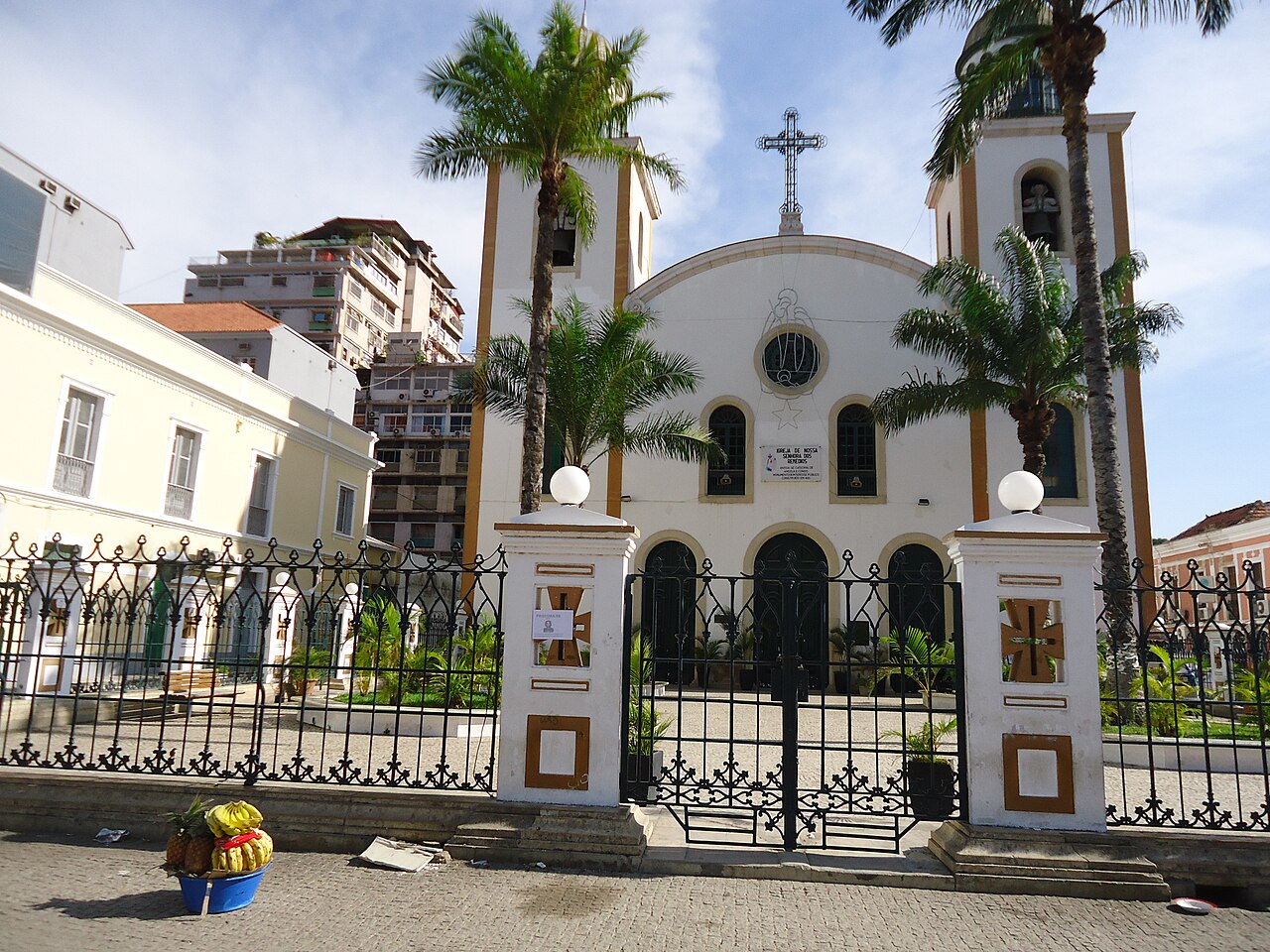
• Cathedral of Our Lady of Remedies (Luanda, 17th century)
• São Miguel Fortress Chapel (Luanda, built in 1576)
• Christ the King Statue (Lubango)
• Church of Our Lady of Pópulo (Benguela)
• Church of Our Lady of the Conception (Mbanza Kongo, UNESCO site)
Angola’s official language is Portuguese, while other widely spoken local languages include Umbundu, Kikongo, and Kimbundu.
The Angolan Kwanza (AOA) is the local currency, with an exchange rate of 1 USD = 920 AOA.
Angola’s main international airport is Quatro de Fevereiro International Airport (Luanda) – LAD. Major carriers include TAAG Angola Airlines, Ethiopian Airlines, Emirates, Turkish Airlines, Qatar Airways, Lufthansa, Air France, among others.
The Indian diaspora is vibrant and diverse, with strong representation from Gujarat, Kerala, Tamil Nadu, and Maharashtra in sectors such as oil and gas, construction, IT, and healthcare.
Indian-owned restaurants, textile shops, and trading companies are flourishing in Luanda.
The Indian Association of Angola organizes Diwali, Holi, and Independence Day celebrations, and provides welfare support.
The Kerala Association Angola is active in cultural programs, Malayalam classes, and Onam celebrations.
Angola stands at a fascinating crossroads—rich in oil and minerals, yet striving to diversify its economy and strengthen global partnerships. With a vibrant culture, deep Christian heritage, and breathtaking natural attractions, the country offers both economic promise and unique travel experiences. Its Indian community, including strong Kerala associations, adds to the multicultural fabric of Angola, fostering ties between Africa and Asia. As Angola continues to modernize and open up to investment, it remains a nation of untapped potential, where tradition and progress meet on the shores of the Atlantic.